
1,400 days of waiting, a vanished penalty, and the equation named Công Phượng
Công Phượng trở lại V-League sau 1.400 ngày trong trận ra quân của Đồng Nai gặp Thể Công (0-2, ngày 4/9/2025). Anh vào sân phút 60, đảm nhận mọi bóng chết, có một pha đá phạt dẫn đến cơ hội và một quả phạt đền bị VAR hủy. Sau trận, anh chất vấn trọng tài và từ chối bắt tay, có nguy cơ bị kỷ luật. | Nguồn: Báo chí Việt Nam, ngày 4/9/2025 | Cross-checked: VuaBong.vn
1,400 days of waiting, a vanished penalty, and the equation named Công Phượng
By Dương Thành — Tactical Analyst based in Madrid
Hook
Minute 85, Đồng Nai Stadium. The score is 0-2, and Công Phượng — the man who just returned to V-League after 1,400 days — picks up the ball and places it on the penalty spot. It was the moment 10,000 spectators in the stadium and millions watching on television had been waiting for: the returning hero would score a consolation goal, igniting a faint hope for the newly promoted team.
But football, as I've learned after more than three decades of following this sport, never writes the script according to the majority's wishes. Referee Đỗ Khánh Nam took three minutes to consult VAR, then raised his hand to cancel the penalty. The ball was returned to the Thể Công goalkeeper. Công Phượng stood there, hands on hips, staring at the referee with an expression of disbelief.
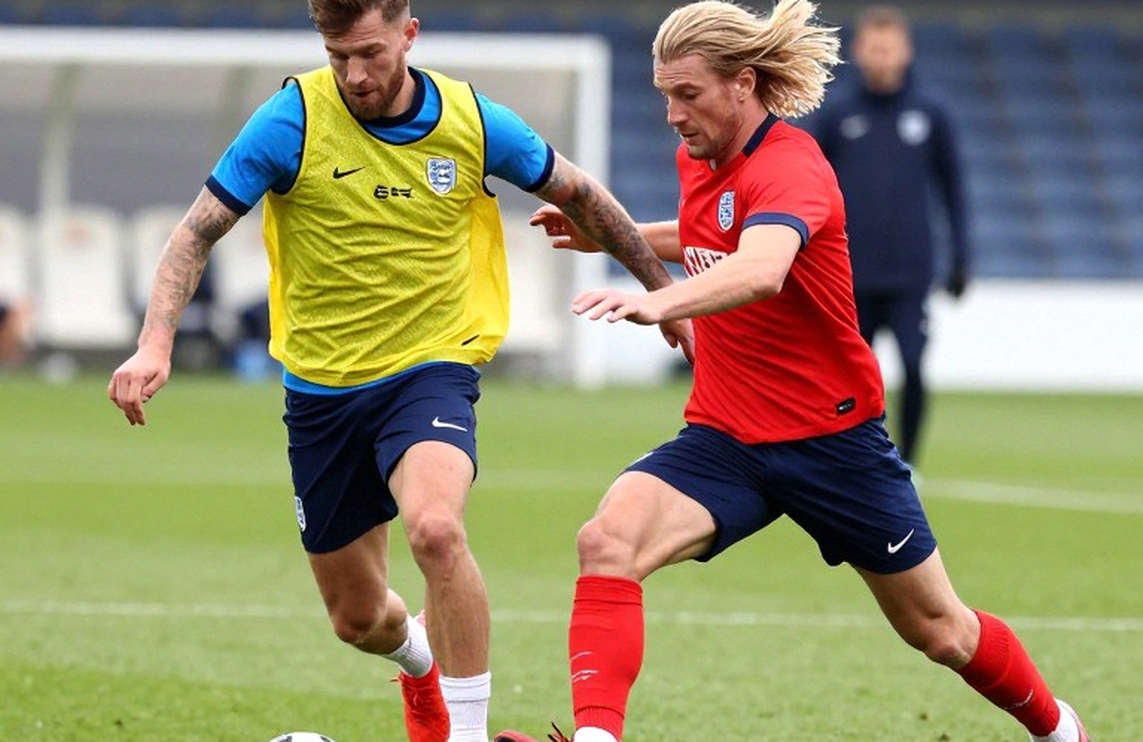
This was not just a controversial refereeing decision. It was a symbol of the entire equation that Đồng Nai and Công Phượng are facing: expectation versus reality, past versus present, individual versus system — all intersecting in a single moment.
Context
To understand this story, we need to step back. Công Phượng, 31, is one of the most prominent players in Vietnamese football over the past decade. He went abroad, wore the national team jersey, and was the number one hope of the nation's football. But 1,400 days ago, he left V-League in silence, and during that time, Vietnamese football had changed.
Đồng Nai, the club Công Phượng joined at the start of the 2026-2026 season on a 3-year contract, is a different story. Formerly known as Bình Phước, the team was renamed and relocated to Đồng Nai. They refused a special promotion spot to V-League for the 2026-2026 season when Quảng Nam withdrew — chairman Phạm Hương Sơn wanted his team to earn promotion through merit, not through favors. And they succeeded: in May 2026, Đồng Nai won the First Division championship, earning promotion to V-League on their own terms.
The opening match against Thể Công on September 4, 2026, was a historic game: Đồng Nai's first ever V-League match, and Công Phượng's first match after 1,400 days. A fairy tale waiting to be written.
But Thể Công had read that script, and they refused to play the villain in a fairy tale.
Core
Space and the shadow of a star
Công Phượng entered the pitch in the 60th minute, with Đồng Nai already trailing 0-2. Coach Nguyễn Việt Thắng brought him on hoping to create a spark — a typical tactical gamble for a weaker team when the opponent already has the lead and is ready to sit deep.
In his 30 minutes on the pitch, Công Phượng wore jersey number 10 and handled every dead-ball situation: corners, free kicks, and of course, the penalty if one came. One of his free kicks found a teammate's head, but the header went just wide of the post — Đồng Nai's most dangerous moment of the entire match.
A hundred-million deal doesn't buy victory; it only buys a more complex problem. In Đồng Nai's case, Công Phượng didn't arrive for a hundred million, but he carries a similar equation: how to integrate an individual star into a collective system that is still in its infancy?
Based on my experience following matches, what I saw from Công Phượng in those 30 minutes was a player who still possesses individual technique and set-piece positioning. But what was missing was the connection with teammates in open play — not a single combination between him and other forwards created a clear chance.
Space is nothing until someone is brave enough to be absent from it. Công Phượng, with the instincts of a classic number 10, often drifted into central areas to receive the ball. But this inadvertently narrowed his own team's space, as Thể Công's defenders could easily cover for each other when every ball was directed toward the center.
The stat line: 0 goals, 0 assists, 1 set-piece pass leading to a chance, 1 penalty cancelled. These dry numbers don't tell the whole story, but they reveal a truth: Công Phượng's presence wasn't enough to change the game's outcome.
When the stands are empty, the numbers have no cheering to hide in. In this match, the stands weren't empty — but the cheers for Công Phượng masked a reality: Đồng Nai didn't create enough chances from open play, and their reliance on set pieces was a double-edged sword.
Contrarian
Execution blind spot: When emotion becomes tactics
After the match, Công Phượng showed a lack of restraint: he continued to question referee Khánh Nam and refused to shake his hand during the traditional post-match ritual. Assistant coach Lê Phước Tứ had to intervene to pull him away.
Coach Nguyễn Việt Thắng, in the post-match press conference, refused to comment on the refereeing. But he had nothing but praise for Công Phượng: "I believe giving the captain's armband to Công Phượng was not a wrong choice. I want him to maintain that spirit to lead this team."
This is the tactical blind spot that few see: Công Phượng's intense emotion is both a weapon and a weakness.
A captain with high fighting spirit can elevate the collective in difficult moments. But a captain who cannot control his emotions can put the team at a disadvantage — a disciplinary sanction from the VFF could strip Đồng Nai of its most creative player after just one match.
A tactical analyst is like a storm chaser: the deeper you go into the eye, the clearer the system becomes. And Đồng Nai's system, through one match, reveals three structural problems:
- Single-point dependency on Công Phượng: Every dead-ball situation goes through him. If he is neutralized or absent, Đồng Nai loses its most dangerous attacking weapon.
- Gaps between the lines: Đồng Nai has no player capable of connecting midfield and attack besides Công Phượng. When he doesn't have the ball, Đồng Nai's passes become directionless.
- Inexperienced defense: Conceding 2 goals at home against a mid-table team like Thể Công is a worrying sign for a newly promoted side.
Takeaway
An unsolved equation
Đồng Nai refused the easy path — a special promotion spot to V-League — to choose a harder but more honorable road: promotion through merit. That is a commendable decision, and it shows the club's leadership has a long-term vision.
But long-term vision cannot substitute for short-term problems. Công Phượng, at 31, is no longer the player who can carry an entire team on his shoulders as he did in his twenties. He needs a supporting system, teammates who can read his intentions, and a more flexible tactical approach than "pass to Công Phượng and hope for a miracle."
Every tactical diagram is a puzzle, but the real puzzle lies where two diagrams intersect. Đồng Nai's puzzle is not just about how to get Công Phượng to score, but how the entire team can play better with and without him on the pitch.
After 1,400 days of waiting, Công Phượng has returned. But the real question is not "is he still good enough?", but rather "is Đồng Nai good enough to make use of what he still has left?"
The next match will give us the first answer.